
Last updated on May 15th, 2026
Table of Contents
The list of IDNs in the US 2026 includes the largest integrated delivery networks ranked by revenue, hospital size, and patient volume. These networks drive the nation’s healthcare delivery, combining hospitals, clinics, and physician groups to ensure coordinated, value-based care.
What are Integrated Delivery Networks (IDN)?
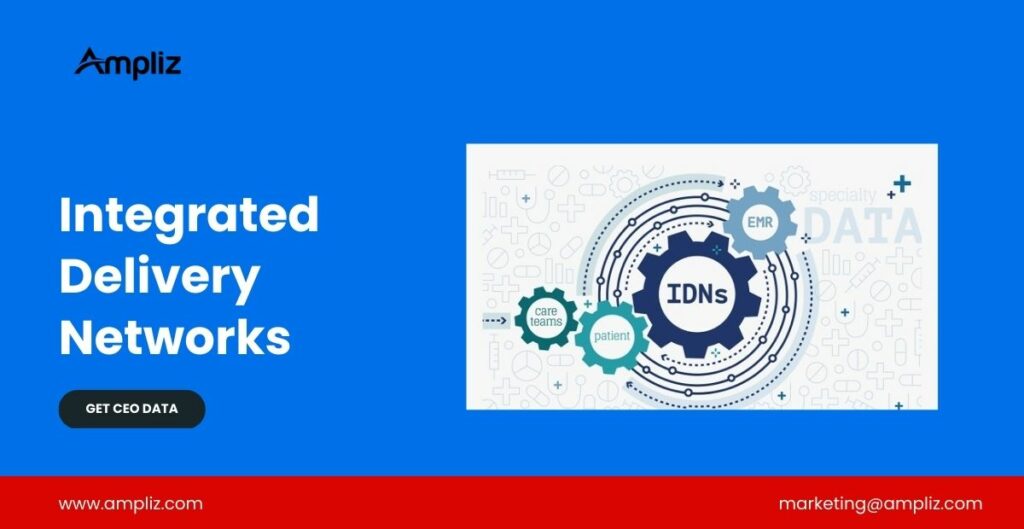
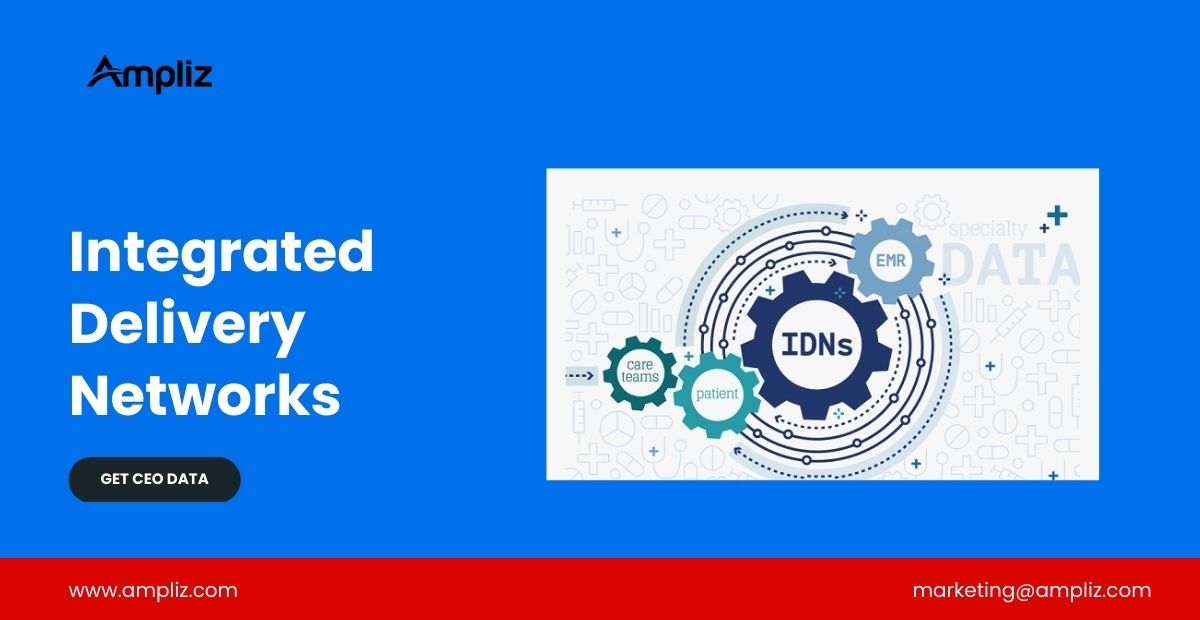
An integrated delivery network (IDN In US) is an organization with a group of allied healthcare providers along with local healthcare facilities.
Integrated delivery networks (IDNs), is an organization that manages end-to-end healthcare facilities of one or more healthcare centers in a defined geographical location.
IDNs are created with a vision to provide quality care and improve patient satisfaction.
On average, there are 576 IDNs in the United States. As of January 2026, Nashville-based HCA Healthcare is the largest IDN in the United States with 214 member hospitals and a total net patient revenue of nearly $42.6 billion.
Common Spirit Health and Kaiser Permanente are honored with the second and third largest health systems concerning revenue size and the hospital network.
Know-How IDNs Impact its Buiness
- Is IDN important to my brand? Do I need to concentrate on IDN now or can I wait?
- How can I target IDNs with integrated delivery network data?
- How do I engage with my targeted IDNs?
Ampliz integrated delivery network data will give you clear data insights into healthcare facilities, revenue size, patient volume, collaboration, affiliates, funding status, partnership, recent contribution, surgical trends, investments, and exclusively more.
Using clear insights, you can reach healthcare stakeholders, IDN influencers, outpatient providers, allied healthcare providers and payer groups.
How Integrated Delivery Networks Differ from Standard Hospital Systems
While the term “hospital system” is often used interchangeably with integrated delivery network, the distinction carries real operational weight for healthcare marketers, vendors, and policy professionals alike.
A standard multi-hospital system may own several facilities without coordinating their clinical workflows, procurement, or patient referral pathways. An integrated delivery network (IDN), by contrast, operates as a fully unified entity — sharing a single governance structure, coordinated care protocols, centralized supply chain management, and often a proprietary or contracted health plan.
This end-to-end coordination is what makes IDNs in the United States uniquely powerful. When a patient enters the system through a primary care clinic, receives specialist referral, undergoes inpatient surgery, and transitions to post-acute rehabilitation, an IDN manages every touchpoint under one administrative umbrella. Electronic health records (EHR) are shared across facilities, billing is consolidated, and quality metrics are tracked system-wide. In such environments, teams often rely on comprehensive expense tracking software to monitor spending across departments and maintain financial oversight efficiently.
For pharmaceutical manufacturers, medical device suppliers, and health IT vendors, this structure fundamentally changes the sales and access strategy. A single formulary approval or technology contract with an IDN’s value analysis committee (VAC) can result in adoption across dozens sometimes hundreds of affiliated hospitals, outpatient centers, and physician practices.
Understanding what an IDN is in healthcare goes beyond the definition. It requires knowing how IDN governance works, who the true decision-makers are, and how procurement authority is distributed between system-level executives and individual facility administrators.
Advantages of Integrated Delivery Network
IDNs provide you with a wide array of inpatient and outpatient care services for hospitals, physicians group, ambulatory surgery centers, Private Health clinics, and Scan centers.
- Leverages your healthcare influence and buying power
- Help you negotiate and handle the competitor payments contract in a way that a group purchasing organization (GPO) would help
- Gives you contract compliance for healthcare products and services
Classifications Of Largest IDNs in the US
IDNs are classified based on the integration level of member healthcare facilities, healthcare procurement, hospices, and care coordination.
Horizontal integration: National, State, government, and investor-owned IDNs come under horizontal integration.
Horizontal integration includes the formation of the multi-hospital system, mergers, and strategic alliances with allied hospitals to form a local integrated network
Vertical integration: Vertical combinations include the acquisition of primary care physicians, healthcare maintenance organizations.
Vertical integration offers cradle-to-grave healthcare services ranging from prenatal care to hospices and assisted living facilities all within the system.
IDN Governance Structure: Who Makes the Decisions?
One of the most common questions from healthcare sales and marketing professionals is: who actually controls purchasing within an integrated delivery network? The answer varies by IDN size, ownership model, and service line but follows recognizable patterns.
System-Level Leadership (C-Suite & VP Layer) The IDN Chief Executive Officer, Chief Medical Officer, Chief Supply Chain Officer, and Chief Financial Officer set the strategic and financial parameters within which all purchasing decisions are made. For high-value medical technology acquisitions, capital equipment, and enterprise software, final approval typically rests at this level. Access to these stakeholders requires a combination of relationship development, evidence-based clinical data, and documented ROI.
Value Analysis Committees (VACs) The VAC is the gatekeeper for most product-level procurement decisions. Composed of physicians, nurses, pharmacy leads, and supply chain professionals, a VAC evaluates clinical utility, patient outcomes data, cost-per-episode impact, and compatibility with existing workflows. Gaining VAC approval is the critical milestone for any supplier seeking formulary inclusion or preferred vendor status across an IDN’s member facilities.
Facility-Level Administrators For products with local variation in clinical preference or operational need, IDN member hospital administrators and department heads retain partial purchasing autonomy. However, this autonomy is narrowing as IDN consolidation deepens and system-wide standardization becomes a financial imperative.
Physician Champions and Service Line Directors Within clinical departments cardiology, orthopedics, oncology, neurology service line directors and key physician champions serve as influential voices in product evaluations. Their clinical endorsement often precedes and enables formal VAC review.
Understanding this layered decision-making structure is essential when developing an IDN engagement strategy. Ampliz’s integrated delivery network data maps these stakeholder relationships at the system, facility, and individual contact level — giving sales teams a clear engagement roadmap.
Why Integrated Delivery Network are Important in Healthcare
As the IDN landscape evolves, having a clear strategy for engaging Champions, Gatekeepers, and Influencers will become increasingly important.
To identify stakeholder groups most receptive to a product value proposition, the engagement strategy should consider three critical factors: Product differentiation, Product usage, and degree of IDN Consolidation.
With economic pressures escalating and related to the profitability of the hospital in US, provider network integration and consolidation will remain a defining factor of the US healthcare landscape.
USA Integrated Delivery Network Market Growth
Over the last decade, the US has witnessed the increased evolution of health systems into highly integrated delivery networks (IDNs).
IDN’s level of influence has grown substantially as networks with the integration of acute hospitals, outpatient providers, and payer groups.
The US integrated delivery network market has undergone significant structural consolidation over the past decade. Driven by value-based care mandates, aging population growth, and the continued financial pressure on independent hospitals, health systems have accelerated their merger and acquisition activity to form increasingly large, vertically integrated networks.
As of 2026, the US IDN market is estimated at over $1.5 trillion in total net patient revenue across all member health systems, up substantially from pre-pandemic baselines. The 20 top IDNs alone account for more than $340 billion in annual patient revenue.
Key market drivers in 2025–2026:
Geriatric demand: The 73 million US Baby Boomers — the oldest of whom are now in their late 70s — are generating sustained demand for chronic disease management, post-acute care, and speciality services that IDNs are uniquely positioned to provide.
Continued M&A consolidation: Hospital system mergers have continued at pace, with regional IDNs absorbing community hospitals and independent physician groups to expand geographic footprint.
Value-based care expansion: CMS’s expansion of accountable care organisation (ACO) and bundled payment models has accelerated IDN formation as health systems seek to capture full-episode revenue.
Workforce integration: Post-pandemic physician employment by hospital systems has reached new highs over 75% of physicians now work in hospital-employed or health-system-affiliated roles, deepening IDN integration.
Digital health infrastructure: IDNs are investing heavily in unified EHR platforms, telehealth networks, and AI-assisted clinical decision tools to coordinate care across facilities.
As more and more geriatric populations age, they are prone to chronic disease. In turn, this will create a huge buzz for affordable healthcare services and boost the growth of the US IDN market.
The market is also expected to be driven by the ongoing consolidation of healthcare facilities, either through collaborations or partnerships.
List of Largest IDNs in US
Here are the 20 Top IDNs in the US listed based on the net patient revenue, number of member healthcare facilities, and staffed bed size.
Require more data insights of IDNs?
Get started with Ampliz for free and get access to compete healthcare IDNs data.
Ampliz gives you comprehensive data insights of IDNs including revenue size, patient volume, collaboration, affiliates, funding status, partnership, recent contribution, surgical trends, investments, and exclusively more. Explore Ampliz healthcare dataset.
Top 20 IDNs in US by Patient Revenue
| Rank | IDN Name | State Code | ID | Staffed bed size | Total Number of Member Hospitals | Number of Discharges | Net Patient Revenue |
| 1. | HCA Healthcare | TN | 4710 | 42,190 | 214 | 1,923,773 | $42,673,974,296 |
| 2. | Common Spirit Health | IL | 981465 | 23,358 | 197 | 959,084 | $29,358,722,418 |
| 2. | Kaiser Permanente | CA | 4713 | 9,625 | 43 | 444,072 | $29,176,611,660 |
| 4. | Ascension Health | MO | 4695 | 16,713 | 117 | 679,089 | $18,788,901,219 |
| 5. | Providence St Joseph Health | WA | 4716 | 10,345 | 56 | 463,500 | $16,286,062,476 |
| 6. | Kaiser Permanente Northern California | CA | 845347 | 4,163 | 21 | 209,916 | $14,359,957,345 |
| 7. | Tenet Healthcare | TX | 4685 | 15,870 | 87 | 652,017 | $14,140,396,155 |
| 8. | Kaiser Permanente Southern California | CA | 845346 | 4,487 | 15 | 185,367 | $14,011,636,037 |
| 9. | Trinity Health | MI | 4712 | 10,471 | 59 | 574,749 | $13,737,577,562 |
| 10. | University of California Health | CA | 560423 | 4,651 | 21 | 178,254 | $13,032,563,332 |
| 11. | Dignity Health | CA | 4698 | 7,407 | 48 | 384,556 | $11,656,703,049 |
| 12. | Community Health Systems | TN | 542233 | 13,783 | 100 | 496,596 | $10,823,928,332 |
| 13. | Universal Health Services | PA | 7055 | 20,607 | 170 | 719,554 | $9,471,725,806 |
| 14. | Northwell Health | NY | 4744 | 6,075 | 21 | 287,889 | $8,970,564,399 |
| 15. | University of Pittsburgh Medical Center | PA | 6448 | 7,072 | 36 | 274,760 | $8,796,223,659 |
| 16. | Cleveland Clinic Health System | OH | 274173 | 4,504 | 18 | 218,142 | $8,666,646,603 |
| 17. | New York-Presbyterian Healthcare System | NY | 7066 | 3,945 | 13 | 204,905 | $8,355,307,233 |
| 18. | Life Point Health | TN | 7004 | 9,374 | 86 | 312,900 | $8,269,550,749 |
| 19. | Mass General Brigham | MA | 7001 | 1,019 | 17 | 158,399 | $8,089,311,911 |
| 20. | Advocate Aurora Health | IL | 965729 | 6,695 | 29 | 263,632 | $8,052,905,383 |
👉 Access complete IDN contact data, decision-makers, and revenue analytics with Ampliz Healthcare Database
Integrated Delivery Networks in US by State 2026
IDN density and market structure vary significantly across US states. High-population states like California, Texas, and New York are home to the largest concentrations of integrated networks, while Midwest states like Ohio and Illinois host some of the most deeply integrated regional systems. Below is a breakdown of leading and largest hospital IDN list by state.
| State | No. of IDNs | Largest IDN | Notable Networks | Market character |
|---|---|---|---|---|
| California | 90+ | Kaiser Permanente (statewide) | Dignity Health, UC Health, Sutter Health | HMO-dominant; high IDN–payer integration |
| Texas | 70+ | HCA Houston Healthcare | Baylor Scott & White, Christus Health, Memorial Hermann | For-profit dominant; fast-growing metro systems |
| New York | 50+ | Northwell Health | NY-Presbyterian, Montefiore, NYC Health + Hospitals | Dense urban networks; strong academic affiliation |
| Florida | 60+ | AdventHealth | HCA Florida, BayCare, Tampa General | Retirement population driving post-acute demand |
| Ohio | 40+ | Cleveland Clinic Health System | OhioHealth, ProMedica, Premier Health | Deep clinical integration; academic health systems |
| Illinois | 35+ | CommonSpirit Health (HQ) | Advocate Aurora Health, Northwestern Medicine, Rush | Urban-suburban duality; strong safety net presence |
| Pennsylvania | 40+ | UPMC | Penn Medicine, Jefferson Health, Geisinger | Large academic medical centre ecosystems |
| Massachusetts | 25+ | Mass General Brigham | Beth Israel Lahey Health, Steward (restructuring), Baystate | Research-heavy; tight insurer integration |
| Michigan | 30+ | Trinity Health (HQ) | Henry Ford Health, Spectrum Health, Beaumont | Auto-industry legacy; strong occupational health |
| Washington | 25+ | Providence St. Joseph | UW Medicine, MultiCare, Virginia Mason Franciscan | Pacific Northwest growth markets; tech-sector insured |
How to Use the IDN List for Healthcare Sales & Marketing
A list of IDNs in the US is only as valuable as the strategy built around it. For healthcare commercial teams whether selling medical devices, pharmaceuticals, health IT platforms, or professional services the IDN landscape presents both significant opportunity and meaningful complexity.
Prioritize by Market Fit, Not Just Revenue Size The largest IDNs in the United States, HCA Healthcare, CommonSpirit Health, Kaiser Permanente generate tens of billions in annual net patient revenue. But enterprise-level engagement with these systems requires sustained investment, long sales cycles, and multi-stakeholder navigation. For many vendors, mid-market IDNs in the $1–5 billion revenue range offer a superior return on sales effort: meaningful scale, faster procurement timelines, and less entrenched competitive positioning.
Map Your Product to Service Line Concentration IDNs vary substantially in their clinical service line mix. An IDN with heavy cardiovascular and orthopedic volume is a different target than one concentrated in behavioral health, oncology, or long-term care. Before approaching an IDN’s value analysis committee, analyze the system’s discharge mix, surgical volume trends, and payor composition to ensure clinical and commercial alignment.
Understand Payer Integration Depth Among the most commercially significant IDN characteristics is payer integration specifically, whether the network operates its own health plan or maintains deep contractual relationships with managed care organizations. IDNs with integrated payer functions (Kaiser Permanente being the definitive US example) control formulary, utilization management, and network design in ways that profoundly affect product access. Knowing an IDN’s payer architecture is essential when positioning value-based pricing or risk-sharing contract structures.
Leverage IDN Data Intelligence for Outreach Sequencing Cold outreach to an IDN without understanding its current vendor relationships, recent capital investments, or strategic priorities is inefficient at best and reputation-damaging at worst. Ampliz’s integrated delivery network data provides the institutional intelligence revenue benchmarks, procurement contacts, technology stack signals, recent M&A activity that enables warm, relevant, personalized outreach to the right stakeholders at the right system.
What Healthcare Companies Should Know Before Reaching IDNs?
IDNs deliver coordinated, high-quality care to patients through their vast networks of healthcare providers, much like accountable care organizations.
Many health systems have a wide range of services; as a result, providers can accommodate nearly all their patients’ medical needs without requiring them to seek out-of-network care.
Additionally, this can improve the communication and collaboration of the patient’s entire continuum of care and help to reduce revenue loss from network leakages.
A large integrated delivery network (IDN) is also capable of leveraging its market influence to increase its negotiation power in a similar fashion to a group purchasing organization (GPO).
In this way, IDNs can lower overall healthcare costs by securing price competition in the supply chain.
Reaching the IDN Influencers
Accelerate engagement with IDN using the right data sets. Identify, target, and leverage your engagement efforts with the right IDN influencers based on their quality initiatives, innovative contracting, disease-specific investment, healthcare facilities, and more.
With more than 9,100 distinct IDN healthcare data, Ampliz gives you an unparalleled level of intelligence on every hospital and IDN in the United States.
Accelerate your healthcare business with targeted, accurate healthcare IDNs and healthcare data sets.
About This IDN Data: Our Methodology and Sources
Ampliz compiles its integrated delivery network data through a combination of primary research, publicly filed Medicare Cost Report data, state and federal hospital licensing disclosures, IRS Form 990 filings for nonprofit health systems, and proprietary data aggregation from verified healthcare facility databases.
Data update cadence: IDN rankings, revenue figures, and membership counts are refreshed on a quarterly basis to reflect the most recent hospital acquisitions, divestitures, and system restructurings.
Revenue figures: Net patient revenue (NPR) data is sourced from the CMS Medicare Cost Report — the authoritative federal disclosure that hospitals are required to file annually. NPR represents total patient care revenue after deducting contractual adjustments and is the industry-standard benchmark for IDN financial comparisons.
Member hospital counts: Reflect acute care hospitals that roll up under each IDN’s governance structure, as verified against hospital licensing records and IDN corporate disclosures. Affiliated outpatient centers, physician groups, and post-acute facilities are tracked separately in our full dataset.
Staffed bed counts: Represent operationally active inpatient beds as reported in the most recent available cost report filing, not licensed bed capacity.
Geographic classification: IDN headquarters state classifications are based on the registered corporate address of the parent health system entity, not the state with the largest operational footprint.
This transparent methodology ensures that Ampliz’s IDN database is one of the most accurate, current, and actionable resources available for healthcare commercial intelligence. If you identify a discrepancy or have data to contribute, our research team can be contacted directly through the Ampliz platform.
Frequently Asked Questions On IDNs
Q1: What is an IDN in healthcare?
An integrated delivery network (IDN) in healthcare is a coordinated system of hospitals, physician groups, outpatient clinics, post-acute care facilities, and sometimes a proprietary health insurance plan, all operating under unified governance and shared clinical protocols. The IDN model was designed to replace fragmented, fee-for-service care delivery with a coordinated continuum of care from preventive services and primary care through acute hospitalization, surgical intervention, rehabilitation, and chronic disease management. IDNs use shared electronic health record (EHR) systems, centralized supply chain management, and unified quality measurement to improve patient outcomes while reducing redundant care and administrative cost.
Q2: How many IDNs are there in the US States?
The number of integrated delivery networks in US varies based on the definition and data source applied. Under a strict integration threshold requiring shared governance, unified clinical protocols, and centralized procurement approximately 576 IDNs operate in the United States as of 2026. Broader industry databases that include all health systems operating under network affiliation models track over 900 active IDNs nationally. The count has fluctuated over the past decade primarily because of accelerating consolidation: independent hospitals and smaller regional systems continue to be absorbed into larger IDN structures through mergers and acquisitions. Texas and California are tied for the most IDN headquarters of any state, with roughly 79 each.
Q3: What is the largest IDN in the United States?
As of 2026, HCA Healthcare headquartered in Nashville, Tennessee is the largest idn in US by net patient revenue, member hospital count, and staffed bed size. HCA operates 214 member hospitals across 21 states, with over 42,000 staffed beds and nearly 1.9 million annual discharges. Its net patient revenue exceeds $42.6 billion annually, placing it well ahead of the second-ranked IDN, CommonSpirit Health, at approximately $29.4 billion. HCA Healthcare is also the largest for-profit hospital operator in the world. CommonSpirit Health, formed through the 2019 merger of Catholic Health Initiatives and Dignity Health, is the largest nonprofit IDN in the United States by revenue.
Q4: What is a hospital IDN list by state used for?
A hospital IDN list organized by state is primarily used by healthcare commercial teams including medical device manufacturers, pharmaceutical companies, health IT vendors, consulting firms, and group purchasing organizations to identify, segment, and prioritize target accounts. At a strategic level, a state-level IDN list helps commercial teams understand market concentration: how many independent decision-making health systems exist in a given geography, how heavily consolidated the market is, and which IDNs command the largest share of patient volume and procurement spending. Healthcare advocacy organizations, health policy researchers, and managed care analysts also use state-level IDN data to study market competition, hospital mergers, and the impact of consolidation on healthcare pricing and access.
Q5: How do IDNs affect medical device and pharmaceutical procurement?
Integrated delivery networks fundamentally reshape how medical device manufacturers and pharmaceutical companies approach market access. Because IDNs consolidate purchasing authority across multiple hospitals and outpatient sites under a single governance structure, a contract or formulary approval at the IDN level can generate adoption across dozens of facilities simultaneously. Most large IDNs operate formal value analysis committees (VACs) that evaluate products based on clinical outcomes evidence, total cost-of-care impact, and compatibility with existing clinical workflows.

V. Subramanyam
Head of Product at Ampliz | Healthcare Data & GTM Intelligence Expert
V. Subramanyam is the Head of Product at Ampliz, where he leads the strategy and development of healthcare data intelligence solutions that help sales, marketing, recruiting, and commercial teams identify and engage healthcare decision-makers across the United States.
With extensive experience in product management, healthcare data, B2B SaaS, GTM strategy, and sales intelligence, he focuses on building products that simplify healthcare prospecting through accurate physician, hospital, executive, and healthcare organization data. His work emphasizes data quality, enrichment, and AI-powered workflows that enable organizations to make faster, data-driven decisions.
Connect with Him:
- LinkedIn: https://www.linkedin.com/in/vsubramanyam
- Company: https://www.ampliz.com

ZoomInfo Pricing Plans? How Much Does ZoomInfo Cost?

Why Your Traffic Stopped Growing and How an SEO Expert Diagnoses It

Why Your Outreach Fails Without Accurate Hospital & Physician Data

Why You Can’t Market to a Cardiologist the Same Way You Market to a Pediatrician
Why Specialty-Level Physician Data Drives Better Campaign ROI in Healthcare Marketing

Why Data Accuracy Matters in Legal Cases Against Negligent Nursing Homes