
Last updated on July 13th, 2026
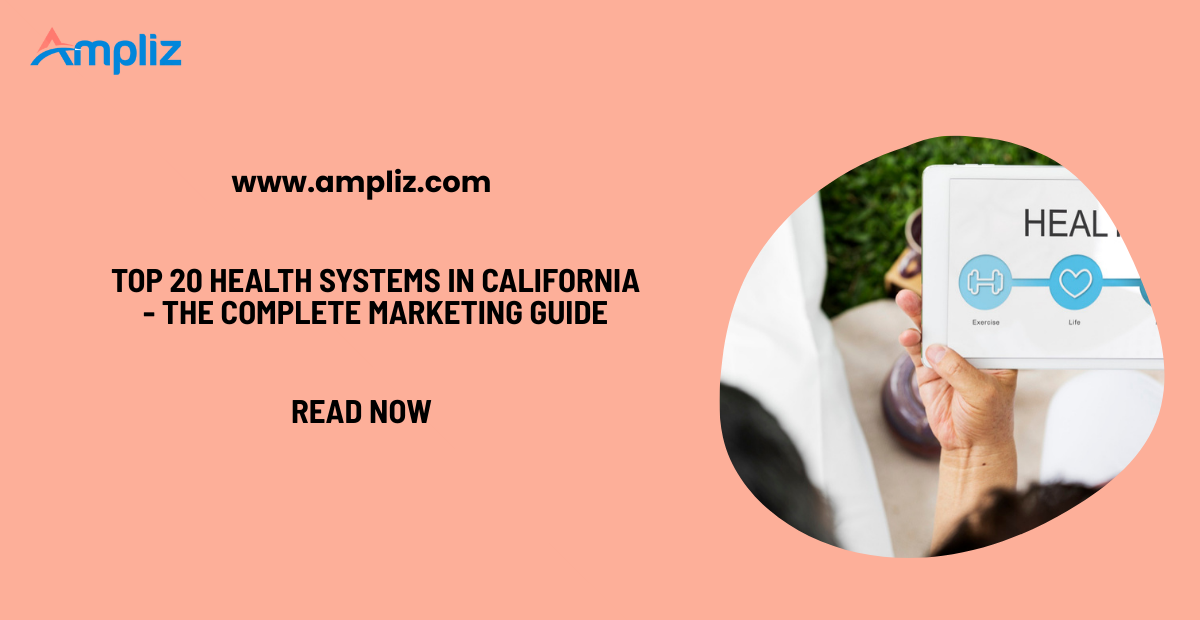
California is home to more than 93 health systems and over 440 hospitals the most of any US state. From vertically integrated giants like Kaiser Permanente to nationally ranked academic powerhouses like Stanford Health Care and UCSF Health, largest California health systems set the pace for clinical standards, technology adoption, and healthcare procurement across the country.
Whether you are a medical device company, digital health vendor, pharmaceutical rep, or revenue-cycle solutions provider, understanding which health systems dominate the California market and why is the first step toward winning enterprise accounts that can drive national traction.
California Healthcare Landscape: Key Stats at a Glance (2026)
| Metric | Figure |
| Total Health Systems in California | 93 registered systems |
| Total Hospitals | 440+ |
| Largest Single System (Beds) | Kaiser Permanente 9819+ staffed beds |
| 2nd Largest System (Beds) | Dignity Health — 8077+ staffed beds |
| 3rd Largest System (Beds) | Prime Healthcare Services — 6565 staffed beds |
| Top Revenue System | Kaiser Permanente (~$28B NPR) |
| Healthcare’s Share of CA Economy | ~$1 in every $5 spent |
Why California Health Systems Matter for B2B Healthcare Sales
The largest California health systems are not just big by patient volume they are enterprise procurement engines. A single system-level contract with Kaiser Permanente, CommonSpirit, or Providence can trigger rollouts across dozens of hospitals and hundreds of outpatient clinics, making California the most strategically valuable state for healthcare B2B sales.
Here is what makes these systems critical targets:
- Centralized procurement: Large IDNs run multi-year RFPs with preferred-vendor programs. One win scales system-wide.
- EHR & data integration demand: Kaiser, UC Health, and Sutter have invested heavily in population health platforms, creating deep demand for interoperability tools, clinical decision support, and SaaS analytics.
- Academic innovation hubs: Stanford, UCLA, UCSF, and Cedars-Sinai act as early adopters for complex medical devices, clinical trials, and digital health ideal for pilot programs.
- Massive Medi-Cal population: Dignity Health (CommonSpirit) and UC Health serve large Medi-Cal populations, driving demand for value-based care analytics, care coordination, and social determinants tools.
2030 seismic compliance deadline: All California hospitals must meet seismic safety standards by 2030, triggering billions in new construction and capital equipment purchases statewide.
How many largest health systems are there in California?
As of Ampliz 2026 healthcare data records there are 93 number of health systems in California.
We provides an authoritative Top 20 list, explains the landscape and concentration of power, answers the simple question “how many largest health systems are there in California?”, and finishes with a step-by-step marketing playbook for reaching them using Ampliz healthcare data intelligence.
What Are the Largest Health Systems in California?
The largest health systems in California include:
- Kaiser Permanente
- University of California Health (UC Health)
- Dignity Health
- Sutter Health
- Prime Healthcare Services
These systems dominate healthcare delivery due to their large bed capacity, integrated networks, and centralized procurement systems.
This guide ranks the Top 20 largest California health systems by staffed beds and revenue (where available), explains what makes each system strategically important, and closes with a step-by-step B2B marketing playbook for reaching decision-makers at scale.
List of Top Health Systems in California
| Rank | Health System | Physician Counts | Bed Count | Access |
|---|---|---|---|---|
| 1 | Sutter Health | 747 | 4069 | Signup |
| 2 | Sharp HealthCare | 676 | 1680 | Signup |
| 3 | Stanford Medicine | 569 | 1169 | Signup |
| 4 | Stanford Health Care | 496 | 775 | Signup |
| 5 | Scripps Health | 462 | 1356 | Signup |
| 6 | Stars Behavioral Health Group | 201 | 32 | Signup |
| 7 | Kaweah Health (FKA Kaweah Delta Health Care District) | 106 | 493 | Signup |
| 8 | Adventist Health (AKA Adventist Health System/West) | 97 | 3087 | Signup |
| 9 | University of California San Francisco Health System (AKA UCSF Health) | 81 | 1569 | Signup |
| 10 | John Muir Health | 71 | 823 | Signup |
| 11 | MemorialCare Health System | 61 | 1196 | Signup |
| 12 | NorthBay Health (AKA Northbay Healthcare) | 55 | 204 | Signup |
| 13 | UCLA Health System (AKA UCLA Health) | 47 | 891 | Signup |
| 14 | University of California Davis Health (AKA UC Davis Health) | 46 | 742 | Signup |
| 15 | California Pacific Medical Center | 39 | 499 | Signup |
| 16 | Cottage Health (FKA Cottage Health System) | 24 | 453 | Signup |
| 17 | PIH Health | 24 | 854 | Signup |
| 18 | Telecare Corporation | 18 | 122 | Signup |
| 19 | Adventist Health Hanford | 17 | 321 | Signup |
| 20 | Central Valley Doctors Health System | 15 | 10 | Signup |
B2B GTM Playbook: Reaching California Health System Decision-Makers
Winning accounts at the list of California health systems requires a strategic, data-driven approach. Here is a step-by-step go-to-market playbook:
Step 1: Build System-Level Account Maps
Use healthcare data intelligence to map the organizational hierarchy from parent system down to individual hospitals, clinics, and procurement units. Identify the key buying roles at each level: Chief Procurement Officer (CPO), Chief Medical Information Officer (CMIO), Chief Information Officer (CIO), VP of Supply Chain, and Clinical Engineering Director.
- Use NPI and tax ID data to confirm true system affiliations versus independent operators.
- Map decision-making structure: Kaiser centralizes; Sutter Health and Providence partially delegate to regional presidents.
Step 2: Score & Prioritize Accounts
Not all 20 systems warrant the same resource investment. Score accounts by annual capital spend, bed count, relevant service lines (e.g., oncology, cardiac, orthopedics), recent news signals (new hospital construction, EHR migrations, leadership changes), and Medi-Cal vs. commercial payer mix.
- Tier 1: Kaiser, UC Health, CommonSpirit/Dignity, Sutter — enterprise plays requiring C-suite access.
- Tier 2: Providence, Cedars-Sinai, Stanford, Adventist Health — strategic accounts with specialized buying.
- Tier 3: Sharp, Scripps, MemorialCare, Hoag — regional leaders for targeted regional campaigns.
Step 3: Persona-Based Messaging
California health systems have distinct buyer personas that require tailored messaging:
- CFO / VP of Finance: Total cost of ownership, multi-site ROI models, contract risk reduction, capex vs. opex frameworks.
- CMIO / CIO: EHR interoperability, HL7 FHIR standards, integration timelines, data security (HIPAA compliance).
- Clinical Leaders: Peer-reviewed outcomes evidence, clinical trial results, specialty-specific case studies.
- Supply Chain / CPO: Group purchasing alignment, implementation timelines, service terms, references from comparable systems.
Step 4: Multi-Channel Outreach Sequence
- Email: Verified, deliverable emails to C-suite with concise value proposition and one-pager attachment. Keep bounce rates under 5% using validated contact data.
- LinkedIn: Targeted content marketing to procurement and informatics roles; warm connections before cold outreach.
- Phone / SDR: Call scripts must reference a specific hospital initiative or recent news (e.g., ‘Your Sacramento seismic replacement project…’).
- ABM Advertising: Target procurement and clinical informatics roles with display ads on healthcare-focused platforms.
- Events: California HIMSS chapter events, hospital association conferences, and system-specific vendor days.
Step 5: Pilot-to-System Expansion
The highest-value path in California health systems is a successful pilot at one hospital that becomes a system-wide deployment. To accelerate this path: document clinical and financial outcomes rigorously from the pilot site, align with the CMIO or CPO as your internal champion, and build a system-level business case that maps the pilot ROI to all facilities.
Ampliz data enables dynamic personalization at scale insert correct hospital names, recent project references, and facility-specific metrics into outreach sequences.
Final thoughts
California health systems are diverse but concentrated: a small group of enterprise systems Kaiser, UC Health, CommonSpirit, Sutter, Providence, Cedars-Sinai, Stanford and other regional leaders control outsized purchasing power and adoption influence. For B2B healthcare sellers, the strategic approach is clear: prioritize the Top 20–30 systems for enterprise plays, map decision-makers precisely, tailor messages to persona-specific KPIs, and use verified healthcare data to reduce wasted touches.
Ampliz healthcare data intelligence lets you build accurate account maps, enrich contact lists, detect buying signals, and automate personalized outreach all critical to turning a pilot into a system-wide deployment.
FAQs: Largest hospital systems in California
1. How many major health systems are in California?
As of 2026, there are 93 registered health systems in California. When including smaller regional operators and physician-led networks, over 100 systems and networks operate in the state.
2. Which is the largest health system in California?
Kaiser Permanente is the largest, with the highest number of staffed beds and integrated care operations.
4. Why should marketers target large health systems in California?
Large systems offer:
- Higher deal value
- Centralized decision-making
- Scalable contracts across multiple facilities
5. How can I get healthcare decision-maker data?
You can use healthcare data platforms (like Ampliz) that provide:
- Verified contacts
- Organizational hierarchy
- Intent signals for targeting

V. Subramanyam
Head of Product at Ampliz | Healthcare Data & GTM Intelligence Expert
V. Subramanyam is the Head of Product at Ampliz, where he leads the strategy and development of healthcare data intelligence solutions that help sales, marketing, recruiting, and commercial teams identify and engage healthcare decision-makers across the United States.
With extensive experience in product management, healthcare data, B2B SaaS, GTM strategy, and sales intelligence, he focuses on building products that simplify healthcare prospecting through accurate physician, hospital, executive, and healthcare organization data. His work emphasizes data quality, enrichment, and AI-powered workflows that enable organizations to make faster, data-driven decisions.
Connect with Him:
- LinkedIn: https://www.linkedin.com/in/vsubramanyam
- Company: https://www.ampliz.com

US Hospital Payer Mix: Medicare, Medicaid & Commercial Insurance
Hospital payer mix is one of the most useful indicators for understanding how hospitals generate
List of Hospitals in South Carolina
Last updated on July 13th, 2026 South Carolina is an important healthcare market for B2B
Best List of Hospitals in Michigan: The Ultimate B2B Healthcare Marketer’s Guide
Last updated on July 13th, 2026 For healthcare B2B marketers, medical device executives, healthcare IT
Top List of Assisted Living Facilities In California
Last updated on July 13th, 2026 Do you consider the size of the organization of
Top List of Hospitals in Las Vegas 2026
Last updated on July 13th, 2026 Las Vegas is one of the fastest-growing healthcare markets

List of Dermatologists in US Hospitals 2026
Last updated on July 13th, 2026 In 2026, Ampliz’s data indicates there are 21,172 list