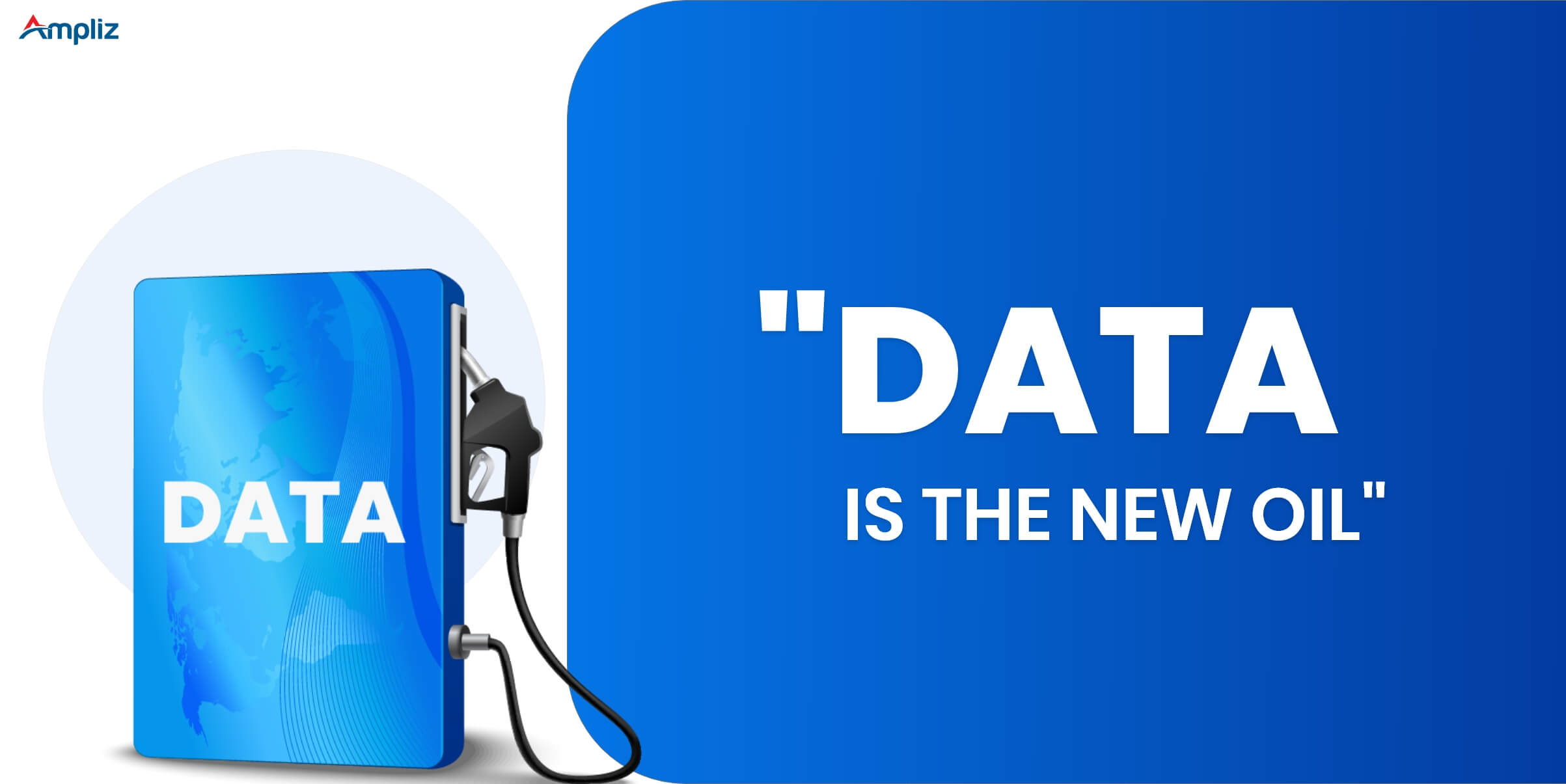
The Economist magazine shook the world with the stor , “The world’s most valuable resource is no longer oil, but data” in 2017. The topic has since then attracted many discussions since its release, and as a result”Data is the new oil” has become a common catchphrase. The problem is that the debate usually focuses on why this is a bad thing.
The global Big Data market is set to grow over USD 100 billion by 2027, which is more than twice the expected market size in 2018. The software industry would become the large consumer of Big Data by 2027, with a significant market share of 45%.
However, you cannot deny that oil and gas, and other industries are in a lousy state due to COVID19, the state is even worse than the recession of 2010. Let’s take a look at its current state and how it compares to the data industry.
Why Data is the New Oil?
Pandemic data has seen an inflow of vast amounts of information from various devices, mostly household appliances, medical equipment, and mobile phone and similar gadgets sharing their data over the internet. The sources of data are just not limited to these.
Sure, there are genuine trepidations about how tech goliaths are taking advantage of what they understand about us. Same time, there are countless avenues in which data can improve the world. Let’s examine just a few examples:
Oil and gas
Perhaps the primary and most significant brunt of the coronavirus pandemic was on the downstream oil market. A massive slump in the prices of crude oil within a short time has left a lasting impression on the industry.
Consider on January 1, 2020, the price of a barrel of crude oil was exchanged for $67.05 on NASDAQ exchange. By March 15, 2020, the price had crashed to $30.00 a barrel. Oil majors like B.P. have taken a significant hit to their market cap. As of today, it is 51% of what it was at the beginning of 2020.
Companies in the oil and gas sectors are struggling with declining demand, while ensuring employee wellbeing and business solidarity, oil price war, and had to focus on building malleable business models that can guide to long-term suppleness as the world recovers from the COVID19 crisis.
Healthcare
The Covid19 has seen an enormous influx of medical data. The medical data, the terabytes of information on infections, viruses, and how it affects different people based on their genealogy or ancestry have skyrocketed.
All the pharma corporations, leading universities with medical research capabilities, and research foundations have become a warehouse of medical data.
The initiatives taken by the above entities have already seen a breakthrough in developing a vaccine for COVID19.
According to Harvard Medical School research, machine learning systems have been reasonably accurate versus human pathologists in the detection of breast cancer. While machine learning was 92% accurate, humans were at 96%.
However, the magic lies in the combined efforts of humans and machines. Pathologists and robots worked together with the discoveries with the scans by the machine learning systems achieved an accuracy of 99.5%.
The room of error is reduced to 5 per thousand.
It is 56,000 fewer misread breast scans per year alone in the U.S.
To accomplish this, researchers had to amass vast quantities of data points from which they trained their machine learning models.
It isn’t just concern radiology; the emerging field of gene therapy maps pathologies to specific genetic mutations. It means that newly identified cancer patients now regularly get their genes sequencing done so that oncologists can recommend the most effective way of treatment.
The key to all of these life-saving advances is petabytes and petabytes of data.
Autonomous Vehicle
Autonomous vehicles (A.V.s) are here. The benefits are endless: safer roads, a boost to the economy, more reliable travel, and less peak-hour rush. But possibly the most significant benefit from the autonomous vehicle is the reduction in greenhouse gases (GHG) emanating from automobiles.
Research conducted at Poznan University shows that autonomous vehicles could reduce GHG by 40% – 60% eventually. Today’s mode of transportation accounts for 29% of GHG only in the United States, states the Environmental Protection Agency.
How do we make the A.V. part of the future?
A.V. vehicles generate petabytes of data. They form the data lake from which the A.V. self-driving with sophisticated machine learning solutions will originate.
The complexity and enormity don’t stop there. Each of these sophisticated “computing platforms that are mobile” will generate terabytes of data every week per vehicle. Higher the number of cars, the higher the amount of data.
All of this is the data you store is the new oil. If a vehicle enters into an accident, you can pull up the images from the automobiles involved recorded to find out what was the reason behind the terrible catastrophe and where do the A.V. algorithms need improvements.
Sales and Marketing
Today, as the new digital marketing and sales gold rush gather momentum due to COVID19, businesses are fraught over by the sheer amount of data they need to manage. There are data about operations, products, services, customers, and others.
Businesses need it all to see through their digital transformations, drive artificial intelligence (A.I.) projects, find new revenue sources, target customers in a better way, find and correct the operational inadequacies, and slash costs.
But data in a silo does not hold much value– all that is important is the usable insights that you can draw from it. Suppose there are any profits to be realized. The whole purpose of crunching the numbers is to get nearer to your customers – to appreciate their needs and likings, their pain points, the customer experience, and the buyers’ journey.
Investment in the required technology paramount to success and CMOs are beginning to comprehend this. Gartner’s 2018/2019 CMO Spend Survey states, “Marketing technology is the largest area of investment for marketing resources and programs.” Up from 22% of the 2017 marketing budget, technology now accounts for a massive 29%. Over 75% of CMOs are focused on data analytics to drive their most important decisions.
Is Data the New Oil?
Data is a new commodity progeny, a profitable, fast-growing industry, stimulating antitrust regulators to step in to confine those who regulate its flow. A century ago, the source in question was oil. The same concerns are being raised by the goliaths that deal with data, the oil of the digital age.
The titans—Alphabet (Google’s parent company), Amazon, Apple, Facebook, and Microsoft—seem unstoppable. They are the top five most valuable listed companies in the world. The profits they make are surging: they collectively made $25bn in net profit back in the first quarter of 2017.
Amazon captures more than half of all online dollars spent in the USA. Google and Facebook shared for almost all the revenue growth in online advertising globally last year.
Such dominating behavior has incited calls for the giants to be broken up, as it happened with Standard Oil in the early years of the 20th century. The size of the company alone cannot be a crime. The giants’ success has benefited consumers but also other business conglomerates.
There would be less than a few who would want to live without Google’s search, Amazon’s prime single day delivery, Facebook’s feed, or LinkedIn’s updates. These businesses do not get alarmed when standard antitrust litigations are applied to them.
The big corporations capitalized on vigorously-growing mobile data traffic, increase in the rate of cloud computing usage, as well as getting their hands on the rapid development of tech like Artificial Intelligence (A.I.) and the Internet of Things (IoT) that not only increased the volume and complexity of data sets also called Big Data.
Advanced analytics tools, like predictive analytics and data mining, aid in extracting value from the data, and generate new business insights. The global worth of Big Data and business analytics market was at 169 billion U.S. dollars back in 2018 and was expected to grow to 274 billion U.S. dollars in 2022.
Which Data is the New Oil?
Google Analytics, ERP data, public health data, inventory data, and various other data varieties concerning specific industrial categories can be defined as the “cultivated data.” Cultivated data is analyzed and given a more organized and usable form than it was before.
What is the Most Valuable Data?
Cultivated Data may not be complex data sets that use an extreme level of computation capabilities that would be a sign of “big data,” but approaches and techniques to data sets that previously were underutilized. Cultivated data isn’t always about volume, variation, or velocity of data — it’s far more crucial to have the output that is relevant and actionable then.
Boutique retailers like Rebecca Minkoff, AllSaints, Faherty Brand, and others have found 42 Technologies’, a data analytics company, invaluable. When 42 Technologies primarily analyzed point-of-sale data to find diamonds in the rough (best selling product or has the best prospect of sales at that point of time) in retailers’ inventory.
Today, the company has expanded to using comprehensive sell-in data, sell-through data, warehouse inventory data, and other data sets to provide many insights into the daily transactions of the retailers.
Data became important even for companies whose core product isn’t necessarily data. Access to this valuable data is precious so that increasing the efficiency of the existing business or new revenue lines can be created.
This phenomenon is becoming increasingly common and can be seen in the unexpected areas — ranging from very niche e-commerce platforms to pet foods and consumer reviews —for many of the companies, cultivated data is one of the primary revenue sources.
Another example, Vizio, which is a large consumer electronics manufacturer, has the largest only source for opt-in smart T.V. viewers data. It launched an influential subsidiary around viewership data business called Inscape.
Enough Data, not enough Data Experts
The lack of A.I. professionals is making it difficult even for Fortune 500 businesses to employ them, with Google, Facebook, and various top tech corporations amassing such talent. And it’s not only fantastic for A.I. developers but even for data scientists, whose stations are becoming harder to fill. One consequence is the rise of analytics platforms that enable people to grow their batch of data scientists.
For example, companies such as ThoughtSpot, Rockset, and more have highly specialized plays such as Falkonry that have each taken a distinct approach to the market.
ThoughtSpot delivers real-time analytics and searches and query capability across numerous sectors. They seem absorbed in search analytics of query services for large businesses.
Falkonry focuses its efforts on predictive analytics for technical procedures, a small and a very focused niche than the other two examples.
This analytics platform gap will only heat up in the upcoming years, and I expect newer approaches will fill this dearth of talent and competences within company walls.
Conclusion
Covid19 has further propelled the growth and usage of data. Data has become an inexhaustible treasure trove of insights that can help enterprises make billions of dollars in revenue. As the usage grows, so will the amount, variety, and depth of data. As all of the above activities take place, the value of converted data increase and the insights generated becomes invaluable.
In a way, data will continue to exist till the time we humans keep recording various information from varied sources in multiple formats. As the analytics capabilities will increase, so will be the depth of insights, thus, making the insights extremely invaluable. Data is an exhaustible source. It can generate much revenue for a very long time. Having the right data set is a phenomenon nothing less than finding a new oil reserve today.

Ampliz is a leading healthcare data intelligence platform that helps B2B marketers, sales teams, and growth leaders connect with the right healthcare decision-makers using accurate, compliant, and actionable data. With deep coverage across hospitals, physician groups, clinics, payers, and life sciences organizations, Ampliz enables precision targeting at scale.

ZoomInfo Pricing Plans? How Much Does ZoomInfo Cost?
Why Your Traffic Stopped Growing and How an SEO Expert Diagnoses It
Why Your Outreach Fails Without Accurate Hospital & Physician Data

Why Data Accuracy Matters in Legal Cases Against Negligent Nursing Homes

Why Compliance Is Critical in Healthcare Marketing

Why Booking Automation Should Be Part of Every Small Business Lead Funnel