
Last updated on June 16th, 2026
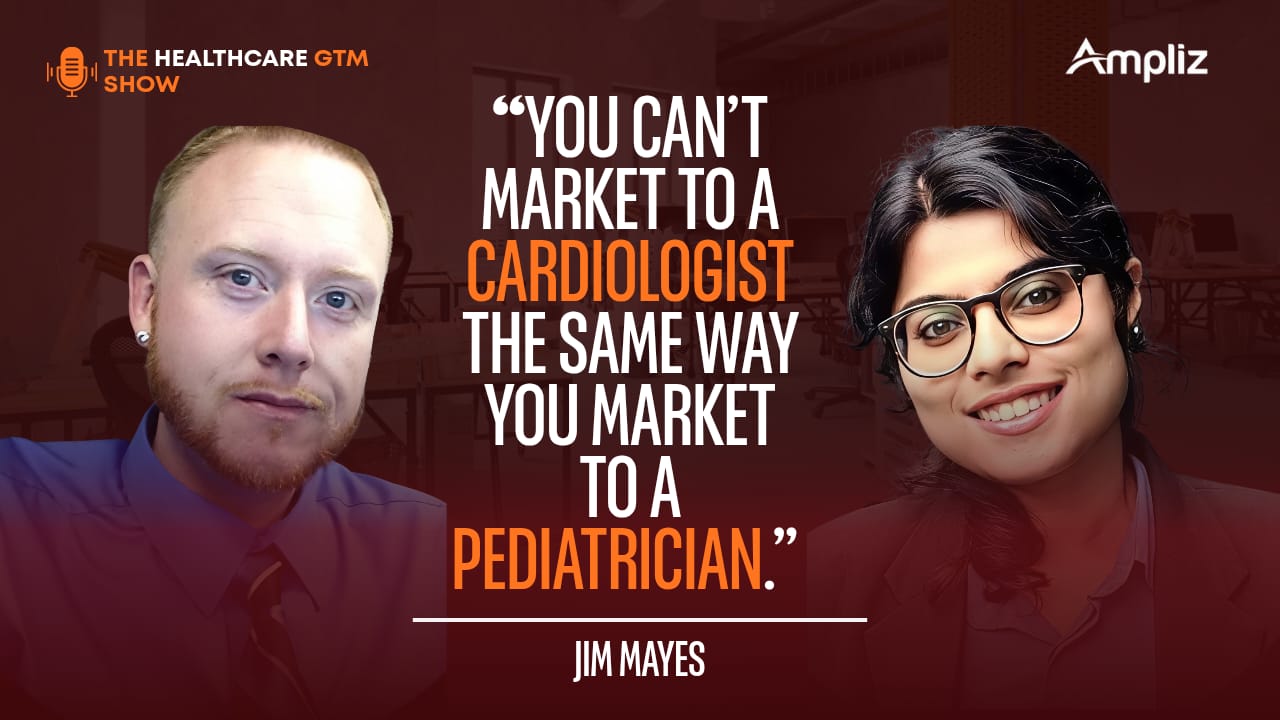
Insights from Episode 1 of the Healthcare GTM Show, featuring Jim Mayes, 11 years in healthcare SaaS.
This blog is drawn directly from a conversation with Jim Mayes on Episode 1 of the Healthcare GTM Show. Jim has spent over a decade across RCM, EHR, and ambulatory care sales on both the vendor and provider side. What follows is not a summary. It is a working resource for healthcare sales leaders, demand gen teams, and RevOps managers built from his field experience.
One observation framed the entire conversation:
“You can’t market to a cardiologist the same way you market to a pediatrician.” Jim Mayes
It sounds obvious. But look at how most healthcare GTM teams actually build their campaigns and almost none of them are operating as if this is true.
The Assumption That Kills Most Healthcare Campaigns
Most teams segment by size. 20 providers. 50 beds. 200 staff. It feels like precision. It is not.
A 20-doctor cardiology group and a 20-doctor pediatric group are completely different selling environments. Different billing complexity. Different decision-maker. Different fear about change. Different pain they woke up with this morning.
When you send both the same sequence with the same subject line, you are not doing outreach. You are broadcasting and hoping something lands.
Jim put it plainly: vendors running automated CRM sequences across mixed specialty lists get occasional results the way a broken clock is right twice a day. Not because the product is wrong because the message was never built for the person reading it.
Why This Is a Data Problem Before It Is a Messaging Problem
Most teams hear ‘specialty-specific messaging’ and jump straight to copywriting. They write a cardiology version and a pediatrics version. They think they have solved it.
They have not.
The message only works if the contact is still in the seat.
Jim shared a story from his own experience: a rep worked an account for months. Strong rapport. Real momentum. Then silence. Closed-lost.
Two months later the provider called in. The contact they had been nurturing had left the practice. The deal closed the same day once the rep was talking to the right person.
“It all starts with the correct data.” Jim Mayes
Healthcare data decays faster than any other vertical. Leadership changes. Practices close. Office managers move. Your CRM catches this 6–12 months later. By then, your competitor has already moved.
What to Do Differently
Three shifts that come directly from Jim’s experience:
- Segment by specialty first, size second. Specialty determines workflow, pain point, and decision-maker. Size is a secondary filter.
- Map your messaging to specialty-specific pain not generic healthcare pain. What ‘denied claims’ means to a cardiology practice is not what it means to a pediatric group? Write for the difference.
- Verify contacts at the specialty level before any sequence runs. A contact tagged correctly six months ago may have left, changed roles, or moved to a restructured practice. Accurate data and specialty context together is what makes outreach work.
The GTM Takeaway
Specialty is not a campaign variable. It is the foundation your entire healthcare GTM strategy sits on.
Jim Mayes has watched this play out across hundreds of practices over 11 years. His conclusion is direct: the teams consistently breaking through in healthcare are the ones who invest in understanding what the specialty actually does before the first touchpoint.
If you are in healthcare sales, demand gen, or RevOps: Episode 1 of the Healthcare GTM Show is built for you. Real experience. No vendor spin.
▶Listen to Episode 1:
Subscribe so you don’t miss Episode 2 dropping Wednesday.
Frequently Asked Questions
Why can’t you use the same marketing approach for all healthcare specialties?
Because each specialty has different workflows, billing models, decision-makers, and pain points. A cardiology practice and a pediatric practice of identical size are completely different selling environments. Segmenting by size alone means your message resonates with neither.
What is the biggest GTM mistake healthcare sales teams make?
Treating contact data as a static list. Healthcare data decays faster than any other vertical roles change, practices merge, leaders move. Most CRMs surface this 6–12 months too late. By then, sequences have already run to dead contacts and pipeline shows losses that were actually preventable misses.
What does ‘diagnose not pitch’ mean in healthcare sales?
A mindset shift from leading with product features to surfacing the buyer’s specific pain through questions. Healthcare professionals don’t wake up excited about software they wake up thinking about denied claims and broken workflows. The rep who speaks to that gets the meeting.
How should healthcare GTM teams segment their outreach?
Specialty first, size second. Once specialty is your primary variable, layer in role accuracy verify the contact is still in the seat and still holds the authority you think they do. Only then does personalisation have a foundation to work from.
What is the Healthcare GTM Show?
A podcast by Ampliz featuring working practitioners in healthcare sales, marketing, and RevOps. Each episode focuses on what actually moves the needle in healthcare GTM field experience from people actively selling into and building revenue operations inside healthcare organisations.

Ampliz is a leading healthcare data intelligence platform that helps B2B marketers, sales teams, and growth leaders connect with the right healthcare decision-makers using accurate, compliant, and actionable data. With deep coverage across hospitals, physician groups, clinics, payers, and life sciences organizations, Ampliz enables precision targeting at scale.
How Healthcare Market Research Can Improve Your Marketing Strategy
Introduction Healthcare marketers are under increasing pressure to prove ROI while navigating tighter budgets and

Healthcare Marketing: Why More Leads Don’t Always Mean More Revenue
Last updated on July 30th, 2026 Your latest campaign generated more leads than the previous