
Funding may be tighter than it was a few years ago, but demand for digital health products hasn’t slowed. If anything, this means the pressure to hire the right people engineers, compliance specialists and clinical operations leaders has increased.
The challenge is that healthcare hiring in the US rarely stays neatly within one state. Talent is scattered across the country, and employment rules change the moment you cross state lines. Workers’ compensation rules and benefits expectations vary, and healthcare adds another layer of regulatory sensitivity on top.
If you’re a healthcare tech startup looking to build a country-wide team, an Employer of Record (EOR) is an invaluable tool. An EOR effectively employs US-based workers on your behalf, managing payroll and compliance and keeping you aligned with state and federal regulations.
Here are 10 Employer of Record solutions worth a serious look
1. Remote
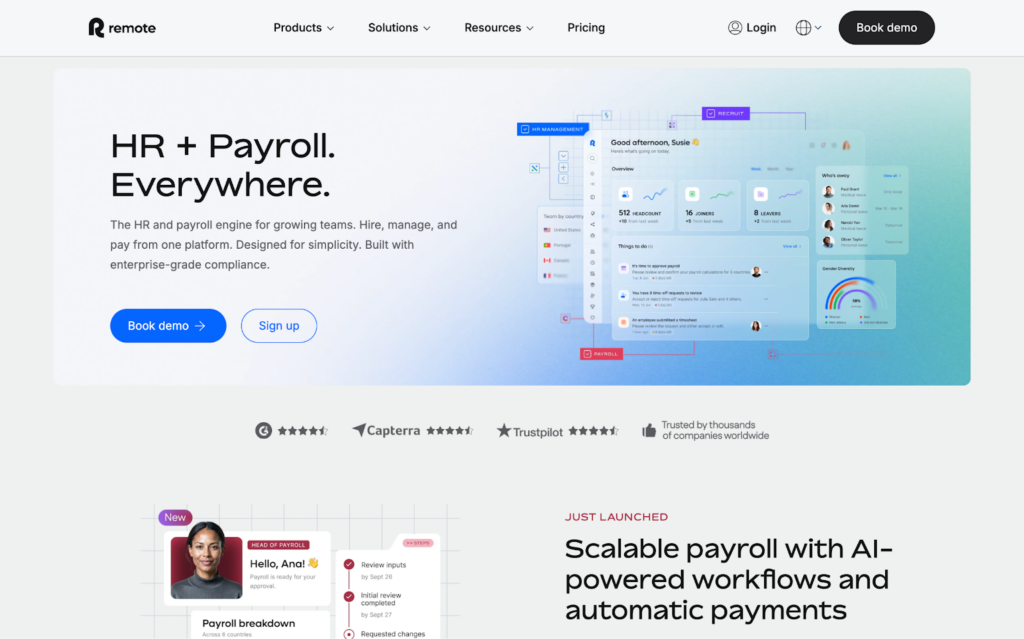
Remote has become a default choice for startups that want predictable, low-friction hiring across the US and that reliability matters in healthcare tech, where compliance mistakes can quickly become expensive distractions.
One of Remote’s biggest strengths is its direct-entity model. Instead of outsourcing employment to local partners, Remote employs workers through its own legal entities, which gives startups clearer accountability and more consistent compliance across states.
For healthcare tech teams hiring engineers in California, product managers in New York or clinical ops staff in Texas, that consistency is a real advantage.
Remote also handles payroll, tax filings, benefits and employment documentation in one clean platform. The interface is intuitive enough for founders and ops teams who don’t want to live inside HR software all day, and pricing is refreshingly transparent.
2. Papaya Global
Papaya Global approaches EOR from a finance and payroll-first perspective, which tends to resonate well with healthcare tech startups that care deeply about cost control, forecasting and audit readiness.
The platform shines when you’re hiring across multiple states and want a clear picture of total employment cost including employer taxes, benefits and payroll liabilities all in one dashboard. For startups reporting to investors or managing burn carefully, that level of visibility can be more valuable than flashy HR features.
Papaya’s compliance engine is robust, and its US payroll coverage is well suited to companies scaling methodically rather than hiring sporadically. It also integrates well with finance systems, making it easier to reconcile payroll data with accounting workflows.
Papaya can feel more enterprise-oriented than startup-friendly, but for healthcare tech companies that prioritize payroll accuracy and financial clarity, it’s a strong contender.
3. Rippling
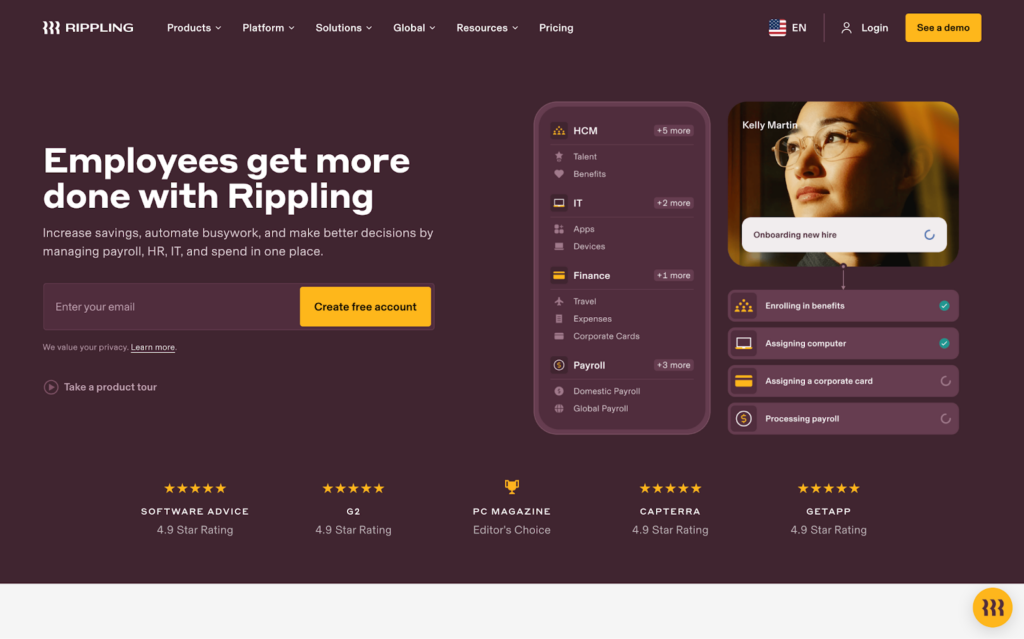
Rippling is best known for bundling HR, payroll, IT and access management into a single system and that all-in-one approach can be surprisingly useful for healthcare tech startups with distributed teams.
Rippling’s EOR offering fits neatly into its broader ecosystem. You can onboard an employee, run payroll, provision a laptop, and manage system access from one platform. For startups handling sensitive healthcare data, that tight control over onboarding and offboarding is a real operational win.
Its US payroll and benefits infrastructure is solid, and multi-state hiring is handled smoothly. Rippling also offers a wide range of integrations, which helps as teams grow and processes become more complex.
Rippling can feel like overkill if you’re only looking for EOR services, while its location coverage isn’t quite as extensive as EOR-first platforms. But if you want global hiring tools embedded in a broader operational stack, Rippling is hard to beat.
4. Remote People
Remote People is a strong choice for healthcare tech startups that need reliable, compliant hiring across multiple US states without overcomplicating operations or costs.
The platform offers transparent and flexible Employer of Record pricing, starting from $199 per employee per month, which is particularly appealing for startups managing tight budgets while scaling nationally. For healthcare-focused teams hiring engineers, compliance professionals, or operations staff across state lines, that predictability helps with both planning and investor reporting.
What sets Remote People apart is its balance between local US compliance expertise and global scalability. According to independent EOR comparator RemotePad, Remote People is ranked among the leading USA EOR providers and the reasoning is clear. The platform simplifies onboarding, payroll, benefits administration, and ongoing compliance while ensuring alignment with state and federal employment regulations.
For healthcare tech startups that want a cost-effective, compliance-driven EOR solution without sacrificing flexibility, Remote People delivers a practical and scalable approach to building distributed US teams.
5. Justworks
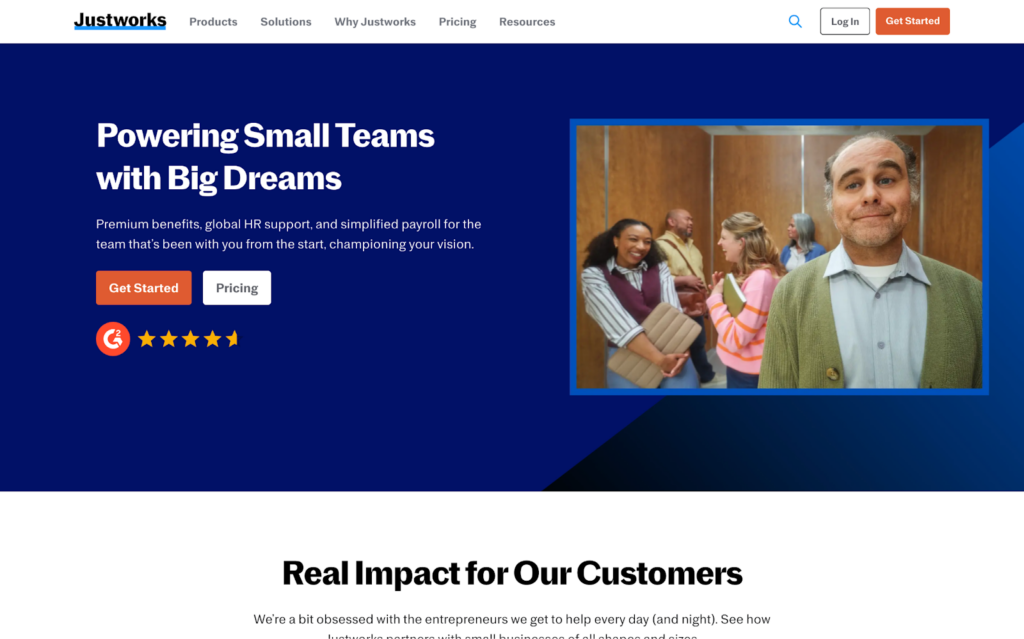
Justworks is a familiar name in the US HR space, and its EOR-style services work particularly well for healthcare tech startups focused primarily on domestic hiring.
Where Justworks stands out is its benefits. It gives startups access to competitive health insurance plans and employee perks that are often hard to secure independently a meaningful advantage when recruiting in a competitive healthcare talent market.
Payroll, tax and compliance are handled efficiently, and the platform is easy to navigate without extensive training. For startups hiring clinicians or care coordinators across multiple states, Justworks removes a lot of the administrative friction.
The main limitation is scope. Justworks isn’t built for complex global expansion, and customization options can be limited. But if your focus is US-only growth with strong benefits, it does the job.
6. TriNet
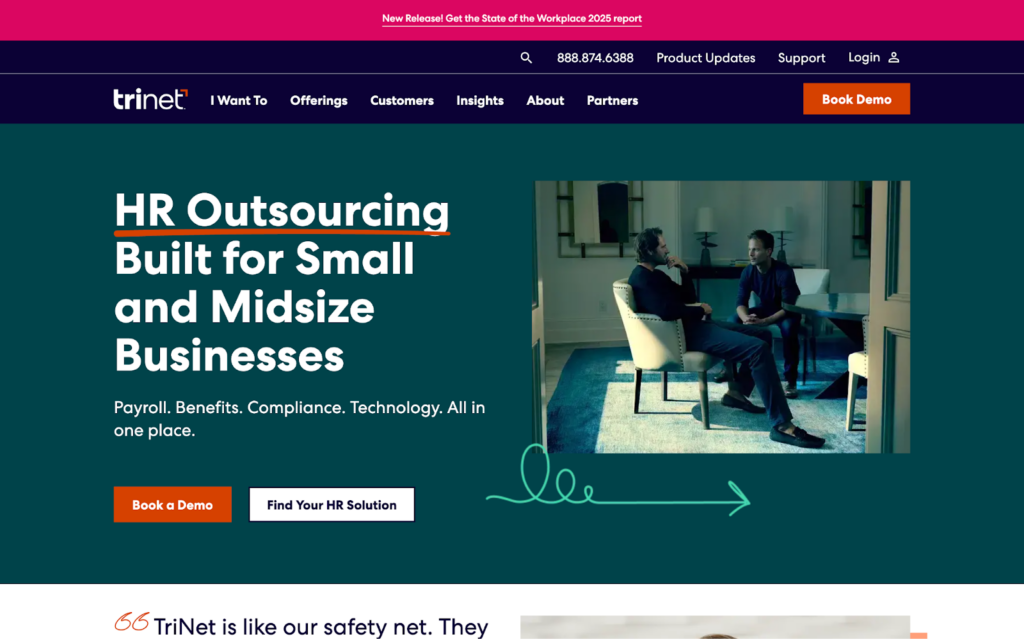
One of the more established players in the US employment space, TriNet boasts deep expertise in payroll, compliance and HR including industry-specific knowledge that can be useful for healthcare tech.
TriNet offers structured HR guidance alongside EOR-style employment, which is ideal if you’re navigating issues like regulated environments or fast-growing headcount. Payroll and benefits administration are reliable, and compliance support is well documented.
Its strength lies in depth rather than agility. Pricing isn’t always transparent upfront, but for healthcare tech startups that want strong HR backing rather than just payroll processing, TriNet is certainly worth a look.
7. Deel
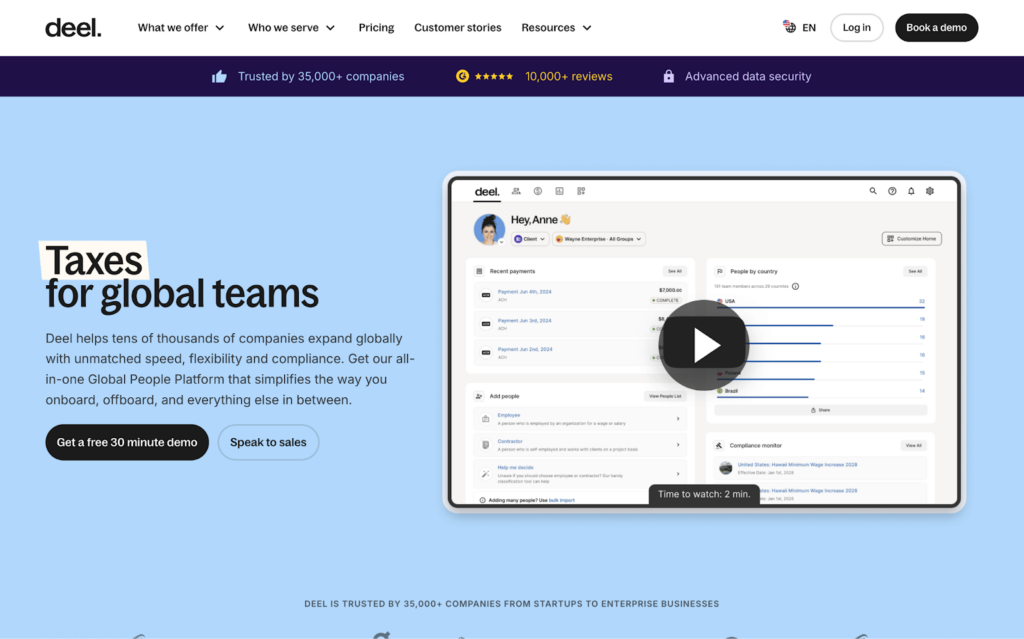
Deel is most well-known for global hiring, but its US EOR offering is also well suited to healthcare tech startups building distributed teams across states.
The platform is fast to deploy, easy to navigate, and flexible enough to support both contractors and full-time employees. Deel’s workflows are really streamlined, which helps startups move quickly when hiring engineers or product specialists.
Deel’s compliance coverage across US states is solid, and it offers a broad range of integrations that support scaling teams, but some advanced benefits and healthcare-specific nuances may require closer review compared to more US-centric providers.
Even so, for startups that want speed and flexibility without sacrificing compliance, Deel is a very strong option.
8. Safeguard Global

Safeguard Global is built for companies that take compliance and reporting seriously, great if you’re a tech startup preparing for audits or regulatory scrutiny.
The platform offers detailed payroll reporting, workforce analytics and compliance tracking across US states. Plus, for leadership teams that want visibility into headcount costs and hiring trends, Safeguard’s analytics are a standout feature.
Onboarding and processes can feel more formal than startup-native tools, but that structure is often intentional. If you value clear documentation and predictable workflows, Safeguard Global delivers consistency rather than speed.
9. Multiplier

Multiplier has gained popularity by keeping EOR simple and that simplicity works well for healthcare tech startups that want the basics handled properly without overengineering.
The platform covers compliant employment, payroll, benefits and contracts across US states with straightforward workflows. It’s refreshingly easy to follow, even for teams without dedicated HR staff.
Multiplier doesn’t offer a broad ecosystem of adjacent tools, but that’s part of its appeal. If you want an EOR that does exactly what it promises and stays out of the way, Multiplier is a practical choice.
10. Atlas
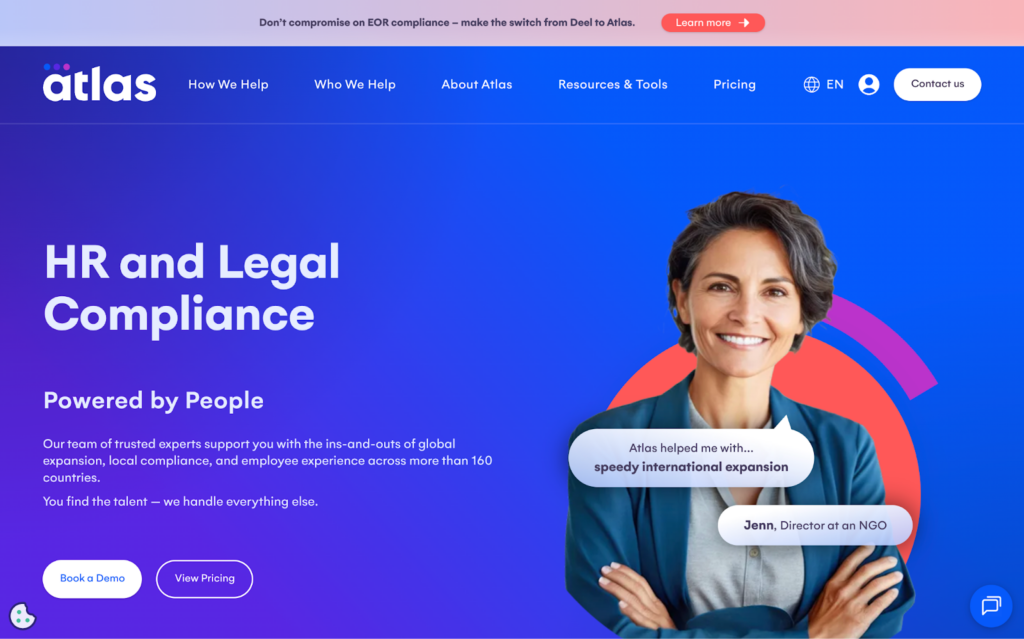
Atlas takes a compliance-first approach to EOR, which can be reassuring in healthcare-adjacent environments where risk tolerance is low.
Much like Remote, the platform emphasizes direct employment and doesn’t rely on third parties, meaning payroll, tax compliance and benefits administration are handled with care. It’s a good fit for startups that prioritize stability over rapid experimentation.
Atlas may feel rigid compared to more startup-friendly tools, but for healthcare tech companies that value precision and legal certainty, that rigidity is often a feature rather than a flaw.
Building a healthcare tech team across the US doesn’t have to mean drowning in payroll rules or having sleepless nights over compliance. The right EOR can quietly handle the complexity while you focus on product and patients.
Each of these platforms takes a slightly different approach from Remote’s clean consistency to Rippling’s operational depth, the best choice ultimately depends on how fast you’re hiring, how regulated your environment is, and how much internal HR infrastructure you already have.


ZoomInfo Pricing Plans? How Much Does ZoomInfo Cost?

Why Your Traffic Stopped Growing and How an SEO Expert Diagnoses It

Why Your Outreach Fails Without Accurate Hospital & Physician Data

Why Data Accuracy Matters in Legal Cases Against Negligent Nursing Homes

Why Compliance Is Critical in Healthcare Marketing

Why Booking Automation Should Be Part of Every Small Business Lead Funnel